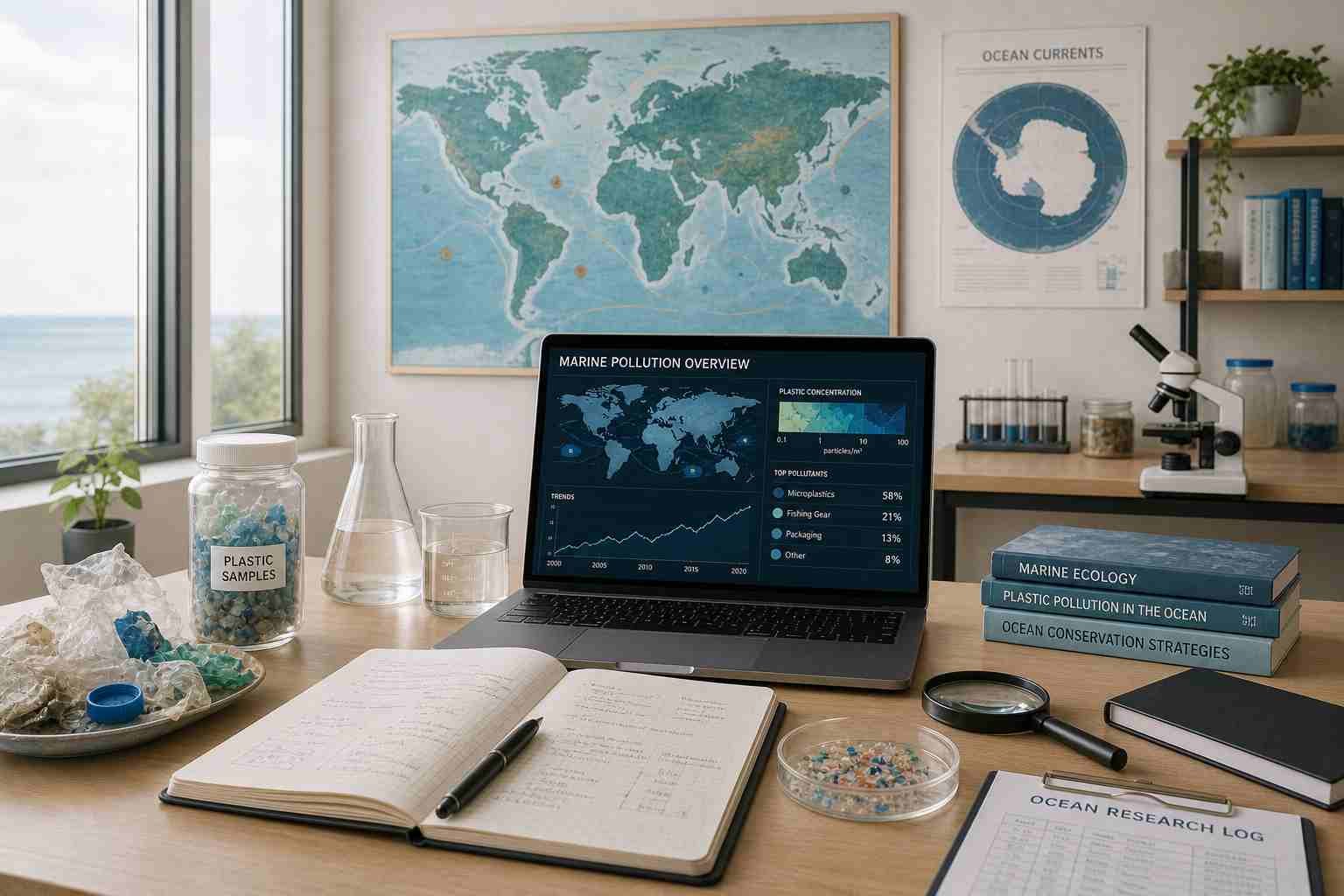
 Japan Government Scholarship in Marine Plastic Abatement at AIT is a Japan-supported, research-focused funding program for international students pursuing environmental and marine studies at the Asian Institute of Technology in Thailand. It supports tuition and research costs, with partial living support depending on the intake. The goal is to train specialists who can reduce plastic pollution in Asia.
| Program Name | Annual Deadline | Stipend Amount | Location | Duration |
|---|---|---|---|---|
| Japan Marine Plastic Abatement Scholarship (AIT) | Varies by intake (usually March/July) | Partial stipend (varies by batch) | Thailand (AIT) | 2 years (Master’s) |
What is the Japan Government Scholarship in Marine Plastic Abatement at AIT?
This is not a typical “study in Japan” scholarship. It is funded by the Japanese government but delivered through the Asian Institute of Technology (AIT) in Thailand.
Here’s what matters. The program is designed to train students who can work on real environmental problems, especially plastic waste in oceans. Instead of classroom-only learning, it focuses on research, fieldwork, and regional impact.
The degree itself is awarded by AIT, not a Japanese university. However, the funding and research direction are closely linked to Japan’s environmental policies and international commitments.
Why is Japan funding marine plastic research through AIT?
Japan has a clear policy goal here. Under its National Action Plan for Marine Plastic Litter, the country aims to reduce plastic waste leakage into oceans and promote sustainable waste systems across Asia.
But here’s the reality. Plastic pollution does not respect borders. A large portion of marine plastic comes from rivers and coastal areas in developing regions. That is why Japan invests in regional education programs instead of limiting funding to its own universities.
AIT plays a strategic role. It already trains students from across Asia, Africa, and beyond. So instead of funding individuals one by one, Japan supports a system that produces trained experts who return to their countries and implement solutions.
Is this scholarship fully funded or partially funded?
Let’s be direct. This is usually a partially funded scholarship, not fully funded in the strict sense.
In most cases, the scholarship covers:
- Full or major portion of tuition fees
- Research-related expenses
- Limited monthly stipend (varies by intake)
What it may not fully cover:
- Complete living expenses
- Travel costs
- Personal expenses
This matters because many students assume “government scholarship” means everything is paid. That is not always true here. You need a basic financial plan to cover any shortfall, especially for living in Thailand.
Who is eligible for the Japan-supported AIT scholarship?
Eligibility is fairly straightforward but competitive.
You are generally expected to have:
- A bachelor’s degree in a relevant field (environmental science, engineering, marine studies, etc.)
- Strong academic record
- English proficiency (IELTS or equivalent)
- Interest in environmental or plastic waste research
Priority often goes to students from developing countries in Asia, but the program is open to international applicants.
Here’s what selection committees really look for. Not just grades, but alignment. If your academic background and future goals clearly connect to marine pollution or sustainability, your chances improve.
What programs can you study under this scholarship?
The scholarship is tied to specific programs at AIT related to environment and sustainability.
Common study areas include:
- Environmental Engineering and Management
- Marine and Coastal Resource Management
- Waste Management and Circular Economy
- Climate Change and Sustainability
Each program has a research component. That means you are not just attending classes. You are expected to work on real-world problems, often linked to plastic waste systems, recycling strategies, or policy development.
What documents are required for the application?
This is where many applicants struggle, not because it’s difficult, but because it’s detailed.
You will typically need:
- Academic transcripts and degree certificates
- Statement of purpose or research interest
- Abstract of Master’s Thesis (if applying after a previous degree)
- Two reference letters submitted via the portal
- English test scores (IELTS/TOEFL)
- CV or academic resume
Every document has a purpose. The statement shows direction. The references confirm credibility. The thesis abstract proves you can handle research. Missing or weak documents are one of the main reasons strong students get rejected.
How does this compare to the MEXT (Monbukagakusho) scholarship?
Students often confuse this with MEXT, but they are very different.
MEXT (Monbukagakusho) scholarship:
- Fully funded
- Study in Japan
- Covers tuition, travel, and living stipend
- Highly competitive
Japan Marine Plastic Scholarship at AIT:
- Usually partially funded
- Study in Thailand (AIT)
- Focused on environmental research
- Slightly more accessible but still competitive
So the choice depends on your goal. If you want full funding and life in Japan, MEXT is stronger. If you want a focused research program in environmental science with regional impact, AIT is a practical option.
What is the selection process and how competitive is it?
Selection is based on academic merit, research potential, and relevance to the program’s goals.
The process usually involves:
- Initial application review
- Academic evaluation
- Possible interview or further screening
Competition is real but not impossible. Compared to global scholarships like Chevening or MEXT, this program has a more targeted applicant pool.
Here’s what makes a difference. A clear research direction. If you can explain how your work connects to marine plastic issues in your country, you stand out.
When is the application deadline and intake period?
AIT typically has multiple intakes each year, commonly around:
- March intake
- August intake
Deadlines usually fall a few months before these intakes.
Instead of waiting for exact dates, plan ahead. Start preparing documents at least 3 to 4 months earlier. Test scores, references, and research ideas take time.
What is student life like at AIT for international scholars?
Living at AIT is different from studying in major cities like Tokyo or London. It is quieter, more academic, and more international.
You will experience:
- A diverse campus with students from 40+ countries
- Affordable living compared to Western countries
- On-campus accommodation options
- A research-focused environment
Thailand itself is relatively budget-friendly, but you still need to manage your expenses carefully, especially if your stipend is limited.
Are there alternative fully funded scholarships for marine or environmental studies?
Yes, and it’s smart to apply to more than one.
Strong alternatives include:
- MEXT Japan Scholarship
- DAAD Germany (Environmental Programs)
- Erasmus Mundus Joint Masters
- Australia Awards Scholarships
Each has different funding levels and requirements. The key is not to rely on one option. Build a list and apply strategically.
How do you decide if this scholarship is right for you?
This is the part most students skip, and it costs them time.
Ask yourself:
Do you want to work in environmental or marine sustainability?
Are you comfortable studying in Thailand instead of Japan?
Can you manage partial funding if needed?
If your goal is research in plastic waste and environmental systems, this scholarship makes sense. It gives you practical exposure and a regional perspective.
If your priority is full funding and studying in Japan specifically, then you should focus more on MEXT.
Final Thought for Your Decision
This scholarship is not about prestige. It is about purpose.
If you care about solving real environmental problems and want a career in sustainability, it is a strong path. But go in with clear expectations. Funding is helpful, not always complete. Competition exists, but clarity of purpose can set you apart.
Plan smart, apply early, and don’t depend on one option.

Scholarship and education policy analyst sharing updates on global study grants, government programs, and policy changes across Asia, Africa, and the Middle East.